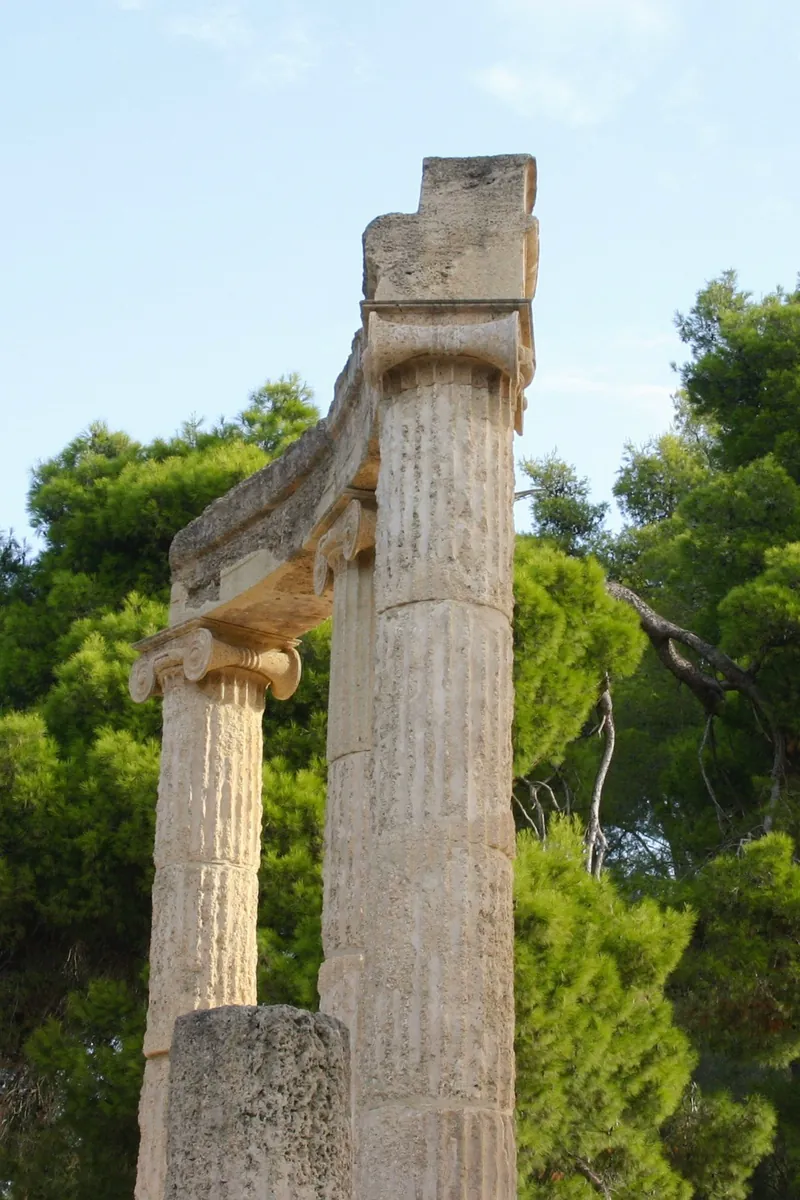
Stand in the stadium where the Olympic Games began, 776 BC
The sanctuary of Zeus in the western Peloponnese, birthplace of the Olympic Games and home of one of the Seven Wonders.
Book the guided Olympia visit- 776 BC First Olympic Games
- Olympic flame Still lit here today
- Seven Wonders Statue of Zeus stood here
- Site + 2 museums One combined ticket
Tickets and tours for Ancient Olympia
Compare the best-rated ways to visit, check live availability and book in a few taps.
- Top pick
Olympic site all-inclusive private tour with a local expert
A private 2 to 2.5-hour walk through the Olympic site with a certified English-speaking guide, admission ticket included.
From US$135Check availability ↗ Ancient Olympia: Archaeological Site and Museum Entry Ticket
Entry to the archaeological site, the Archaeological Museum and the Olympic Games Museum with self-guided audio; non-refundable.
From US$29Check availability ↗Katakolo: Olympia Tour and Archeological Museum
A shore excursion from Katakolo port with coach transport, a licensed guide and entrance to the site and museum.
From US$123Check availability ↗From Athens: Ancient Olympia Full-Day Guided Tour
A 13-hour round trip from Athens by air-conditioned bus with an escort and audio app; site tickets come with the matching option.
From US$78Check availability ↗Olympia: The Famous VR Glasses Tour with Audio Guide
VR glasses and an audio guide that rebuild the temples as you walk the site; the site entry ticket is bought separately.
From US$28Check availability ↗
More things to do nearby
About Ancient Olympia
Ancient Olympia, in the green valley of the Alpheios river in the western Peloponnese, was the most important sanctuary of the god Zeus and the birthplace of the Olympic Games. From 776 BC the Games were held here every four years for almost a thousand years, drawing athletes and spectators from across the Greek world to compete in the shadow of the great temples — until they were abolished in AD 393. It is a UNESCO World Heritage Site and one of the defining places of the ancient world.
At the heart of the walled grove called the Altis stood the Temple of Zeus, which housed the colossal gold-and-ivory Statue of Zeus by Phidias — one of the Seven Wonders of the Ancient World, now lost. Around it spread the Temple of Hera, where the Olympic flame is still kindled for the modern Games; the Workshop of Phidias; the Philippeion; and the training grounds, treasuries and altars of the sanctuary. Beyond them, through a vaulted stone tunnel, lies the ancient Stadium, its original start and finish lines still set in the earth.
Your ticket also covers the two museums: the Archaeological Museum of Olympia, with the Hermes of Praxiteles, the Nike of Paionios and the sculpted pediments of the Temple of Zeus, and the Museum of the History of the Olympic Games of Antiquity.
Practical information
- Opening hours
- Open daily, year-round. Summer (roughly April–October) approx. 08:00–20:00; winter (November–March) shorter daytime hours, often around 08:30–15:30. Last entry is about 30 minutes before closing, and the museums and site can keep slightly different hours. Hours are set by the operator and change seasonally and on public holidays — confirm on the day of your visit.
- Address
- Archaia Olympia, 270 65, Ilia (Elis), western Peloponnese, Greece.
- Getting there
- Ancient Olympia is in the western Peloponnese. From the cruise port of Katakolo it is about 30–45 minutes by road, which makes it one of the most popular shore excursions in Greece. From Athens it is roughly a 3.5–4 hour drive, or reachable by intercity bus (KTEL) and by train/bus connections via Pyrgos. The site and the museums sit together beside the modern village.
- Accessibility
- A large open archaeological site on mostly level ground with gravel and grass paths, ancient paving and some steps (including the tunnel into the Stadium). Distances between the temples, the Stadium and the museums are considerable and shade is limited, so allow time and bring sun protection and water; the museums have step-free routes for most galleries.
- Bag policy
- Day bags are fine. There is no large-luggage storage on site, so leave suitcases at your accommodation or on your coach/ship.
- Photography
- Personal photography is welcome across the site and, generally, in the museums (tripods and flash may be restricted). Some museum displays post their own signs.
Plan your visit
Practical guides written by our travel team
The Best Time to Visit Ancient Olympia
When to visit Ancient Olympia: the coolest hours, the best months, how to avoid cruise crowds from Katakolo, and shade tips for the archaeological site.
How to Get to Ancient Olympia
How to reach Ancient Olympia: from the Katakolo cruise port 18 km away, from Athens by road, from Kalamata and Patras, plus driving, bus and train options.
What to See at Ancient Olympia
What to see at Ancient Olympia: the Temple of Zeus, the Temple of Hera, the ancient stadium, the Workshop of Phidias
Frequently asked
How do I get to Ancient Olympia?
From the cruise port of Katakolo it's about 30–45 minutes by road — Olympia is the classic shore excursion there. From Athens it's around a 3.5–4 hour drive, or reachable by KTEL intercity bus and by train/bus via Pyrgos. The site and museums are beside the modern village of Archaia Olympia.
How long should I allow for the visit?
Allow about 2.5 to 3 hours to do it justice — roughly 1.5–2 hours across the open site and another hour for the two museums. It's a large sanctuary with real distances between the monuments, so wear comfortable shoes and pace yourself, especially in summer heat.
Why is Ancient Olympia famous?
It was the sanctuary of Zeus and the birthplace of the Olympic Games, first held in 776 BC and staged here every four years for almost a thousand years. It held the Temple of Zeus with Phidias's colossal gold-and-ivory statue — one of the Seven Wonders of the Ancient World — and its stadium is where the original Games were run.
Can I see the stadium and the starting line?
Yes. You enter the ancient Stadium through a vaulted stone tunnel, and the original stone start and finish lines are still set in the ground where the foot races began. It's the highlight for many visitors — you can walk (or run) the track the first Olympians used.
Is this where the Olympic flame is lit?
Yes. Before each modern Olympic Games the flame is kindled at the Temple of Hera (the Heraion) at Ancient Olympia, using the sun's rays, and carried from here to the host city. The temple where the lighting ceremony takes place is part of the site you'll visit.
What's in the museums?
The Archaeological Museum of Olympia holds the famous Hermes of Praxiteles, the Nike (Victory) of Paionios, and the sculpted pediments and metopes from the Temple of Zeus, among the finest ancient Greek sculpture anywhere. The Museum of the History of the Olympic Games of Antiquity tells the story of the Games themselves.
When is the best time to visit?
Right at opening or in the last couple of hours before closing, outside the July–August peak, gives you cooler air and fewer groups. The middle of the day is hottest and busiest, especially when cruise excursions and coaches overlap. Because your ticket is for the date you choose, you can pick a cooler, quieter day.
Is Ancient Olympia good for children?
Yes — running a race in the ancient Stadium where the Olympics began lands brilliantly with children, and the story of Zeus, the Games and the athletes brings the ruins to life. It's a big open site with limited shade, so bring hats, sunscreen and water and allow time for breaks.
Is the site wheelchair accessible?
Partly. The site is mostly level but covers a large area with gravel, grass and ancient paving, some steps (including the Stadium tunnel) and long distances with little shade. Visitors with limited mobility can see a great deal but should allow extra time; the museums have step-free routes for most galleries.
Is Ancient Olympia open all year?
Yes — the site and museums are open daily, year-round. Only the daily hours change with the season: longer in summer and shorter in winter, with last entry about 30 minutes before closing. Hours can change on public holidays, so confirm on the day.
How does booking work on this site?
This site is an independent visitor guide to Ancient Olympia. When you choose a ticket or tour, you book it directly with GetYourGuide, which takes the payment, issues the ticket and handles any changes or cancellations. We may earn a commission when you book, at no extra cost to you.